
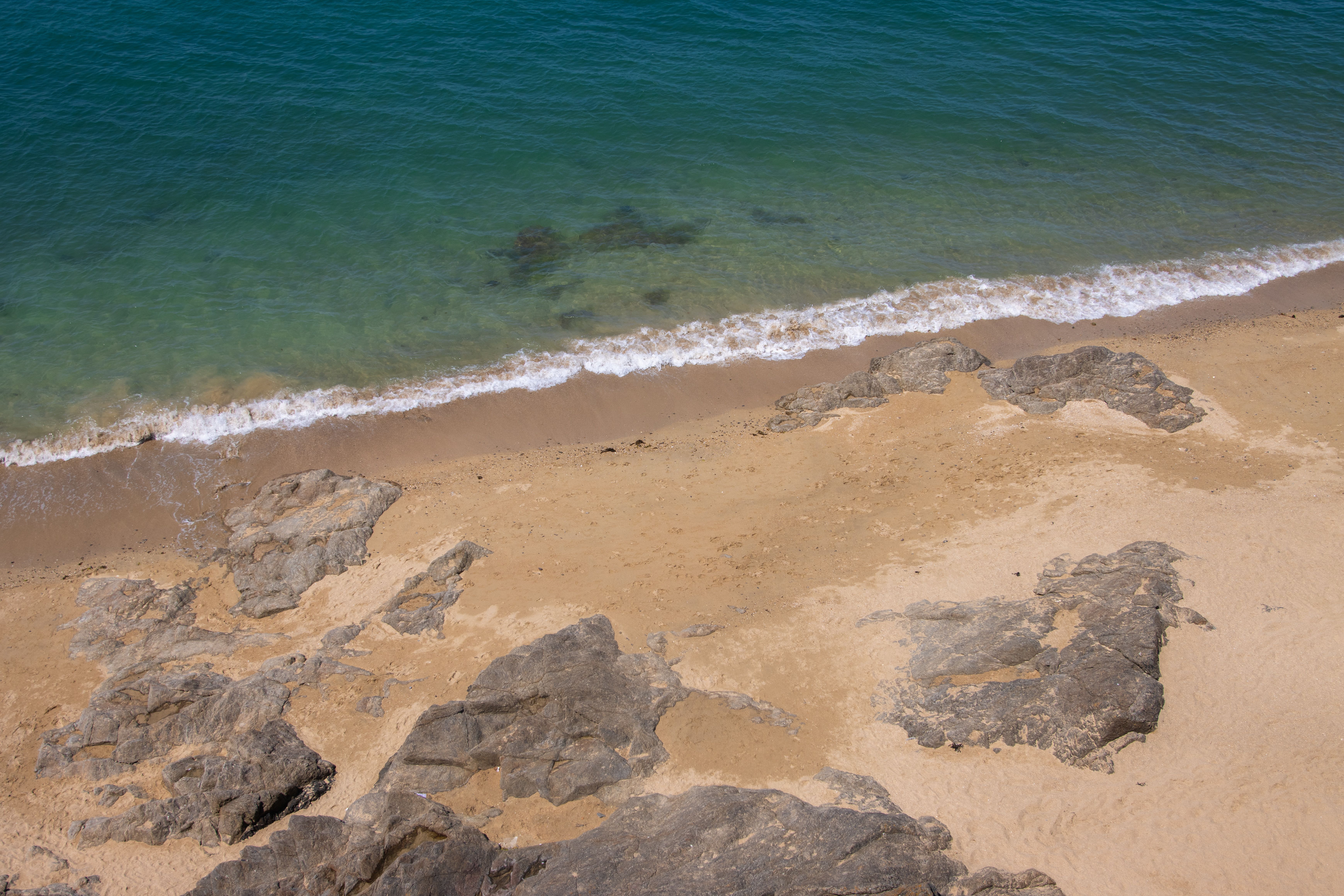
Many American beaches exist in their current width because sand was placed there. Beach nourishment is a large engineering operation, and its logic explains why it is repeated rather than finished.
The sand has to be dredged from somewhere
Material is typically taken from an offshore borrow area identified by survey, or from a navigation channel that requires dredging anyway, which pairs two needs efficiently.
Dredged material is pumped ashore as a slurry through a pipeline, then shaped by earthmoving equipment into the designed profile. The visible construction is the last step of a long process.
Borrow areas are investigated in advance for sand quality and for cultural and biological resources, since dredging disturbs the sea floor where the material is taken.
Grain compatibility determines success
Placed sand must be at least as coarse as the native beach. Finer material is carried offshore quickly by wave action and disappears without widening anything for long.
Color and shell content also differ between borrow areas, which is why a freshly nourished beach can look noticeably different from the one people remember.
Compatibility testing is why a nearby source is sometimes rejected in favor of a more distant and expensive one.
The design includes a sacrificial volume
Engineers place more sand than the finished beach needs, expecting the profile to adjust as waves redistribute material offshore into a bar. The beach appears to narrow within months.
That adjustment is anticipated rather than a failure. The design life is expressed as the interval before renourishment, which is planned from the start.
Timing works around biology
Construction windows are constrained by sea turtle and shorebird nesting seasons and by fisheries considerations, which is why work often happens in winter on warm-water coasts.
Requirements are set through federal and state permitting and vary by location and over time, so the responsible agencies are the source for any specific project.
The recurring cost is the real debate
Because nourishment is periodic, the cost is a permanent commitment rather than a one-time expenditure, and funding arrangements between federal, state and local bodies vary by project.
Supporters point to protection of infrastructure behind the beach and to the recreational economy that depends on sand being there. Critics question the long-run arithmetic as conditions change.
For a visitor, the visible signs are a pipeline along the beach, closed sections during construction, and a temporarily steeper profile at the water's edge.