
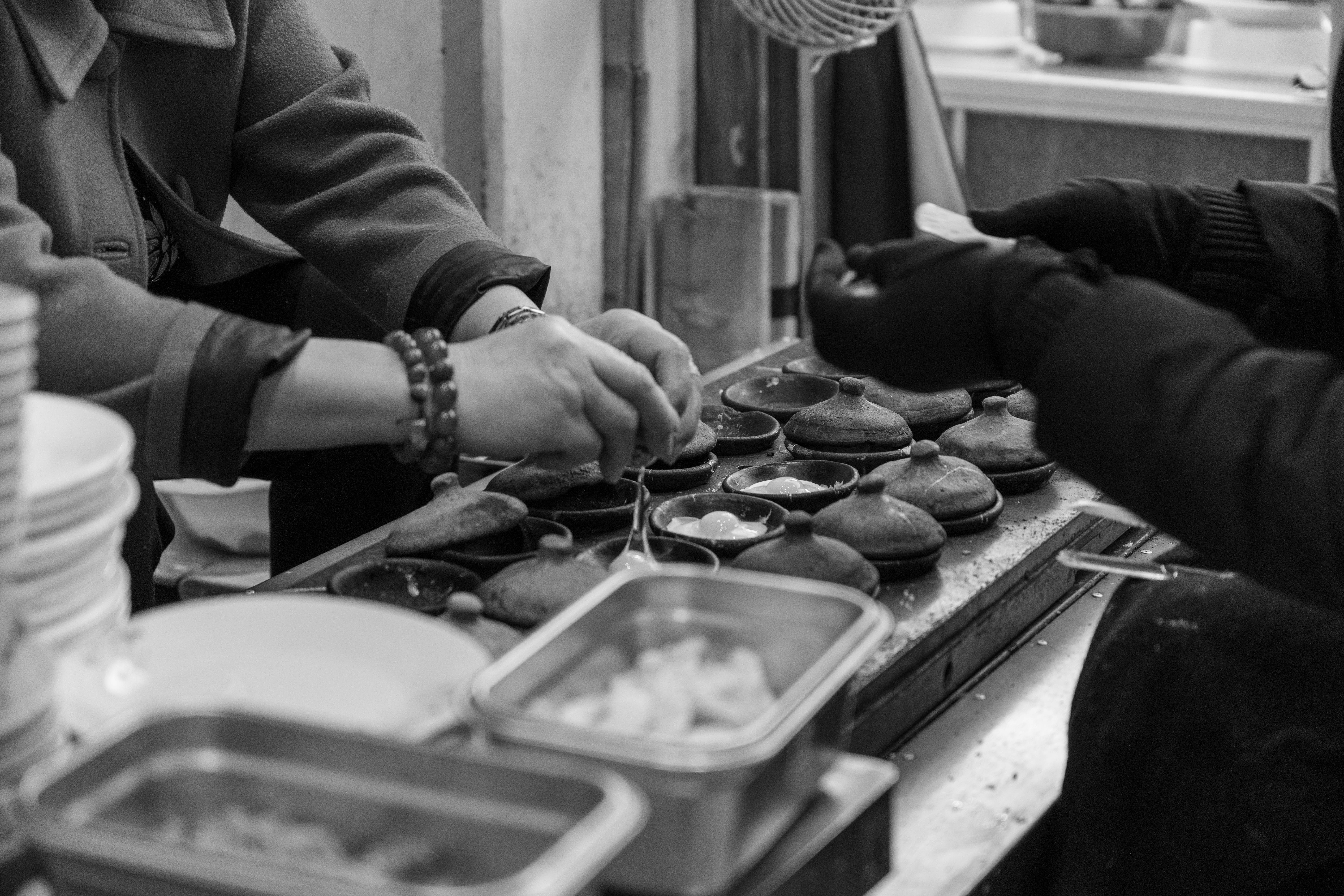
The same dish costs far less from a market stall than from a restaurant a few streets away. The gap is not about ingredient quality, and understanding where it comes from makes it easier to spend well.
A dining room is expensive to keep open
A restaurant pays rent on floor space that generates income only when occupied, and that space must be heated, lit, cleaned and furnished regardless of how many people sit in it.
Service staff, table linen, glassware and the breakage that comes with them are all costs attached to seating rather than to cooking.
A stall carries almost none of this. Its footprint is the size of the cooking equipment, and its customers stand somewhere else.
Turnover per hour works differently
A restaurant table is occupied for the length of a meal, which caps how many customers a given space can serve in an evening.
A stall serves continuously, with each transaction lasting a minute or two, so it can move a large volume through a very small operation.
High volume on a narrow menu allows a low price per portion while still producing a viable business, which is the core of the economic difference.
Menu breadth drives waste
A restaurant offering twenty dishes must hold ingredients for all of them, and anything not sold within its useful life becomes waste that the prices must cover.
A stall typically cooks one thing, or a handful of variations on it, which means the day's purchasing is predictable and almost nothing is thrown away.
Specialisation also produces better execution, since the person cooking has made the same item thousands of times rather than dozens.
The comparison is not like for like
What a restaurant sells includes a place to sit for two hours, somewhere to shelter from weather, a bathroom and the ability to order in stages.
Those are real goods, and travellers who dismiss restaurants as overpriced are often comparing a meal to a snack rather than to an equivalent.
The sensible pattern for most trips is to use each for what it does well, rather than treating one as a cheaper version of the other.
How to judge a stall quickly
A queue of local workers rather than visitors is the most reliable signal, since they are eating there regularly and paying with their own money.
High turnover also matters for safety, because food that moves fast is cooked to order rather than held warm, which is where most problems arise.
Stalls with a narrow menu and visible cooking are generally the better bet, and the ones displaying a wide array of pre-cooked dishes under lamps are worth more scrutiny.